
AIPAS Review 2026: Are Its Electric Bikes Worth Buying?
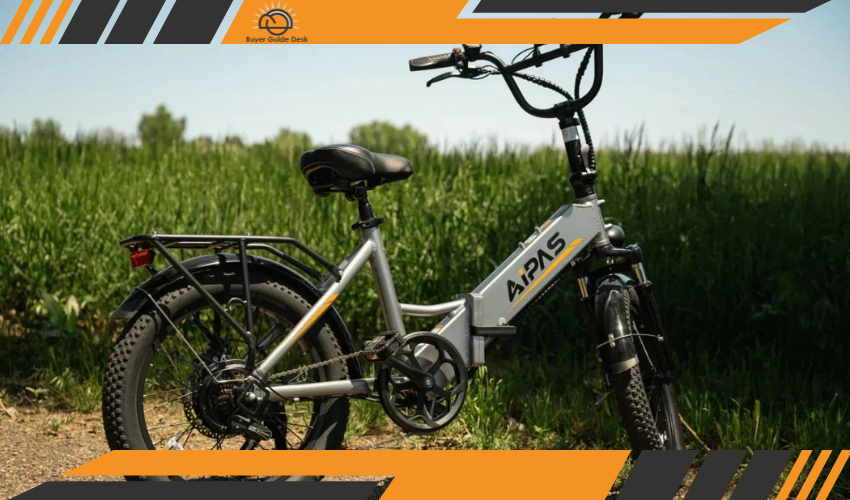
AIPAS has built its reputation around a simple proposition: give riders a lot of electric-bike hardware for considerably less money than many established e-bike brands. Its current lineup includes fat-tire all-terrain bikes, commuter models, folding e-bikes, step-through designs and high-powered long-range models. The headline specifications can look particularly aggressive, with models such as the M1 Pro and M2 Pro advertising 1,800W motors, 48V 17.5Ah batteries, 500-pound payload capacities and claimed ranges of up to 85 miles.
That makes AIPAS interesting, but it also creates the central question behind this review: does the amount of hardware you get justify choosing AIPAS over a more established e-bike company? The answer is more nuanced than the product pages suggest. AIPAS appears to offer strong performance-per-dollar, and customer feedback is overwhelmingly positive overall. At the same time, owner experiences reveal some concerns around actual range, weight, component quality, delivery expectations and warranty or replacement support. In other words, AIPAS can make sense as a value-oriented e-bike purchase, but it should be approached as a budget-to-midrange performance brand rather than a premium bicycle manufacturer.
What Is AIPAS?
AIPAS is an e-bike brand focused primarily on direct-to-consumer electric bicycles. Rather than concentrating on lightweight road bikes or traditional bicycle designs, the company leans heavily into practical, high-powered electric bikes with large tires, suspension, substantial batteries and relatively high payload ratings.
Its lineup covers several distinct use cases. The M-series bikes are aimed at riders who want fat tires, substantial power and off-road or mixed-terrain capability. The C-series focuses more heavily on comfort and everyday riding, while folding models such as the F3 are intended for riders who need greater portability. There are also step-through models that make mounting and dismounting easier.
This broad lineup is important because "AIPAS bike" does not describe one particular riding experience. A compact folding model and a 90-pound fat-tire e-bike can be dramatically different in how practical they are for commuting, storage and transportation. The company also appears to target buyers who are comparing e-bikes primarily on specifications. Motor wattage, battery capacity, tire width, claimed range and payload capacity are prominent throughout the product catalog. That can be attractive to shoppers who want maximum hardware for their budget, but it also means buyers need to look beyond the largest numbers.
What Does AIPAS Sell?
AIPAS currently sells several categories of electric bikes, including fat-tire, off-road, folding, commuter, long-range, step-through and hunting-oriented models.
The M1 Pro Xterrain and M2 Pro Xterrain are among the company's most attention-grabbing products. Current listings show them around the $899 price point, although AIPAS frequently advertises large discounts from much higher reference prices. Both use 48V 17.5Ah batteries, 1,800W advertised motor output and four-inch fat tires, with claimed ranges reaching 85 miles depending on riding conditions and assistance level.
The M1 Max and M2 Max move further toward premium equipment within AIPAS's lineup. They advertise dual-air suspension and hydraulic brakes and are currently listed around $1,099. The C1 Xpress ST occupies a more approachable commuter/step-through position, while the F3 Adventurer provides a folding alternative.
This means AIPAS isn't simply selling one cheap electric bicycle. It is attempting to cover several e-bike categories while keeping prices substantially below many traditional bicycle brands.
Are AIPAS E-Bikes Good Quality?
The answer depends heavily on what you mean by quality.
If quality means how much equipment you receive for the purchase price, AIPAS performs well. Large batteries, fat tires, suspension, powerful motors, integrated lighting and other convenience features are common across the lineup. Owners frequently praise the bikes for feeling substantial and powerful, and many say assembly is relatively straightforward.
If quality means refinement, weight, component consistency and long-term support, the picture becomes less impressive.
AIPAS bikes tend to be heavy. That's not surprising given their large batteries, fat tires, suspension systems and powerful motors, but it matters enormously in daily ownership. A bike that weighs around 80–95 pounds may be perfectly enjoyable once you're riding it but frustrating if you have to carry it upstairs, put it into a vehicle or mount it on a conventional bike rack.
The hardware also shouldn't automatically be assumed to be equivalent to what you'd find on a considerably more expensive e-bike. Some owners report excellent durability, while others describe issues involving brakes, hinges, displays, battery housings and other components. So AIPAS quality is best described as strong specification value with some variability in refinement and component consistency.
AIPAS M1 Pro and M2 Pro: The Value Sweet Spot?
For many shoppers, the M1 Pro and M2 Pro are probably the most interesting AIPAS models because they concentrate the brand's value proposition into one package.
The current M2 Pro, for example, is listed with a 48V 17.5Ah battery, an advertised 1,800W motor, 110 Nm of torque, four-inch tires, full suspension and a 500-pound maximum payload. AIPAS advertises up to 85 miles of range and a maximum speed of 36 mph. On paper, that's a remarkable specification list for a sub-$1,000 promotional price.
But range figures need to be treated carefully. An advertised maximum range is not the same thing as the distance you'll get while riding at high speed, carrying substantial weight, using maximum pedal assist or dealing with hills and wind. Owner reports frequently show much lower real-world range under demanding conditions.
That's normal for e-bikes in general, but it is particularly important here because AIPAS's marketing emphasizes very large maximum-range figures. If you're buying the bike specifically because you expect anything close to the advertised maximum under aggressive riding conditions, you could be disappointed.
The M1/M2 platform nevertheless appears attractive for riders who want a powerful recreational or utility e-bike and understand the compromises. If your priorities are acceleration, fat tires, suspension, carrying capacity and off-road capability rather than portability or lightweight handling, these models offer considerable hardware for the money.
AIPAS M1 Max and M2 Max
The Max models address one of the more obvious weaknesses of the cheaper bikes by adding upgraded braking and suspension equipment. The M1 Max and M2 Max are currently listed around $1,099 and advertise 1,800W motors, 48V 17.5Ah batteries, 500-pound payload capacity and claimed range of up to 85 miles. They also feature dual-air suspension and hydraulic brakes. For a heavier or more aggressive rider, that equipment can matter more than decorative features.
Hydraulic brakes can provide a meaningful upgrade on a heavy, fast e-bike because you're dealing with considerably more mass and speed than you would on a conventional bicycle. Likewise, better suspension can improve comfort on gravel, rough pavement and trails. If you're already considering spending around $1,000 on an AIPAS, the Max models may therefore make more sense than simply buying the cheapest version and upgrading it later.
Are AIPAS E-Bikes Good for Commuting?
They can be, but not every AIPAS model is equally suitable. A commuter who has to carry a bike up stairs every day may quickly regret buying one of AIPAS's large fat-tire models. They're designed around stability and power rather than portability.
On the other hand, someone commuting on relatively flat roads who has secure ground-level storage may appreciate the combination of battery capacity, suspension and comfortable tires. The step-through models can also be more convenient for riders who don't want to climb over a high top tube.
The biggest consideration is speed. Some AIPAS bikes are capable of substantially higher speeds than ordinary Class 1 or Class 2 commuter e-bikes when their settings allow it. That makes local laws especially important. An e-bike's advertised motor capability does not automatically mean every available operating mode is legal on public roads or bike paths in your location.
Before buying, check your local rules for motor output, throttle use, maximum assisted speed and where higher-powered e-bikes are permitted.
What About Off-Road Riding?
This is one of AIPAS's stronger use cases. Fat tires, suspension, high torque and substantial battery capacity make the company's larger models appealing for gravel roads, dirt paths, packed trails and recreational off-road riding. However, buyers should distinguish between off-road capable and mountain-bike capable.
A heavy fat-tire e-bike with suspension can be excellent for rough roads and trails without being appropriate for aggressive jumps, technical downhill riding or demanding mountain-bike terrain. The weight and geometry alone can make a large AIPAS feel cumbersome in situations where a purpose-built mountain bike would be easier to control. In other words, these bikes are best viewed as powerful all-terrain utility e-bikes rather than replacements for lightweight mountain bikes.
Is AIPAS's Claimed Range Realistic?
This is probably one of the biggest areas where buyers need to manage expectations. AIPAS advertises ranges as high as 85 miles on some current models. That's a useful indication of the bike's battery capacity and potential efficiency, but it shouldn't be interpreted as an 85-mile guarantee. Range depends on rider weight, terrain, temperature, tire pressure, wind, speed, pedal-assist level, throttle use and how frequently the motor has to produce substantial power.
Independent owner experiences illustrate the difference. Some riders report getting impressive distances by mixing pedal assist levels, while others report dramatically shorter distances when riding at high speed or using maximum assistance. The practical takeaway is simple: buy the battery capacity, not the headline range number. A 48V 17.5Ah battery provides a useful amount of stored energy, but your actual distance will depend heavily on how you ride.
How Is the Riding Experience?
Owner feedback is generally favorable about the riding experience. The most common positive themes are power, stability, comfort and the feeling that the bikes offer considerable performance for the money. Fat tires can make rough pavement and gravel feel less harsh, while suspension further improves comfort. The downside is maneuverability. Large AIPAS bikes aren't particularly nimble, and their weight becomes noticeable when parking, turning at low speed or moving the bike without motor assistance.
Some owners have also reported wanting better brakes or replacing components such as seats, seat posts or brake systems. These reports don't establish that every bike has those problems, but they illustrate the difference between an inexpensive high-spec bike and a more polished premium model. If you're primarily interested in a relaxed, powerful ride, this may not matter much. If you want a precise, lightweight bicycle-like experience, AIPAS is less convincing.
AIPAS Pricing and Value
Pricing is one of AIPAS's biggest attractions and one area where shoppers should read the numbers carefully. The company frequently displays large discounts, such as bikes being shown at around $899 against reference prices above $2,000. Those promotions can make the bikes look like extraordinary bargains.
However, when discounts appear consistently, buyers shouldn't assume the higher reference price represents what the bike normally sells for. The more useful question is simply: what does the bike cost today, and what do competing bikes offer for that same amount?
At roughly $800–$1,100, AIPAS can offer an impressive combination of motor power, battery capacity, suspension and fat tires. That's where the brand's value argument is strongest. The value becomes less obvious if you're paying substantially more for a model and then need to upgrade brakes, replace contact points or deal with expensive shipping for service or returns.
Shipping and Delivery
AIPAS currently states that it operates multiple U.S. warehouses and estimates delivery at approximately 2–8 business days, including processing and shipping. Customer feedback on delivery is generally positive. Many recent reviewers report receiving bikes quickly and praise the packaging and straightforward assembly. There are exceptions. Some owners have reported substantially longer waits, particularly when inventory or shipping circumstances became complicated.
That makes the safest approach to check the estimated delivery date for the exact model and color before purchasing rather than relying solely on a general shipping promise. If you're buying the bike for a specific vacation, event or deadline, give yourself considerably more time than the minimum advertised shipping window.
AIPAS Return Policy
This is one of the areas where the attractive purchase price deserves more scrutiny. AIPAS currently states that unused products can generally be returned within 14 calendar days of delivery. Customers are generally responsible for return shipping when the return is not caused by a quality issue. The policy also allows additional fees in certain circumstances. For example, non-quality-related returns that aren't packaged appropriately can incur restocking charges, while some cancellation and accessory-return situations have separate fees.
That means returning a large e-bike isn't comparable to returning a pair of shoes. Even if the bike itself is relatively inexpensive, freight can be significant. The 14-day window also isn't particularly generous for an expensive e-bike. Buyers should inspect the bike carefully as soon as it arrives and avoid assuming that they'll have several weeks to decide whether they like it. For this reason, make sure you're confident about frame size, riding position, storage requirements and intended use before ordering.
AIPAS Warranty
AIPAS provides a one-year manufacturer's warranty for the original purchaser. The warranty covers manufacturing defects, with separate provisions for the frame, battery and components. The battery has a one-year prorated warranty, while various components are covered for one year subject to the policy's exclusions. One important detail is that warranty coverage is tied to the original purchaser and approved purchasing channels. Second-hand buyers should not assume that the remaining warranty automatically transfers.
The warranty process can also involve troubleshooting, photographs or videos and potentially DIY replacement of components. AIPAS may send replacement parts rather than requiring the entire bicycle to be shipped back. That's common among direct-to-consumer e-bike companies and can actually be convenient when the replacement process works smoothly. But it also means buyers should be comfortable doing basic mechanical work or have access to someone who can.
What Do Customers Say About AIPAS?
Customer feedback is unusually positive overall. Trustpilot currently shows thousands of reviews for AIPAS, with a very high overall rating. Recent reviewers frequently praise fast delivery, easy assembly, sturdy construction, comfortable riding and strong value for money. The company's own product pages also display large numbers of highly positive reviews. Those signals are encouraging, but they shouldn't be treated as proof that every AIPAS bike will be trouble-free. The negative experiences are especially useful because they reveal where ownership can become frustrating.
Some owners report component failures, battery-related problems, brake concerns or difficulty obtaining replacement parts. There are also complaints about delivery delays and warranty/customer-service experiences. There are even owners who are extremely happy with their bikes after hundreds or thousands of miles, while others have encountered problems relatively early. That variability is more important than any single five-star or one-star review.
Is AIPAS Legit or a Scam?
AIPAS appears to be a legitimate operating e-bike retailer rather than an obvious scam storefront. It has an established product catalog, customer-service channels, warranty documentation, multiple warehouses and a substantial volume of customer feedback. That doesn't mean every marketing claim should be accepted without question.
There are independent discussions questioning advertised range figures, discount pricing and certain specifications. Some individual customers have also alleged serious problems with products or support. These are customer reports rather than independently established findings, so they should be treated as warning signals rather than definitive proof of misconduct.
The better conclusion is that AIPAS is a real e-bike company whose products can provide strong value, but shoppers should verify the exact specifications of the model they're buying and avoid assuming that every advertised number represents typical real-world performance.
Pros and Cons
| PROS | CONS |
| Very strong hardware for the money | Many models are extremely heavy |
| Large batteries and powerful motors | Advertised range may exceed real-world high-speed range |
| Good selection of fat-tire, commuter and folding designs | One-year warranty is shorter than some competitors |
| Generally positive customer feedback | Return window is only 14 days |
| Many owners praise assembly and delivery | Some reports of component and support problems |
| Competitive pricing around the $800–$1,100 range | Large discount claims should be viewed cautiously |
Who Should Buy an AIPAS E-Bike?
AIPAS makes the most sense for buyers who want maximum performance and equipment for a limited budget.
It's particularly appealing if you want a fat-tire e-bike for recreational riding, gravel roads, mixed terrain, neighborhood transportation or carrying heavier loads. Riders who value battery capacity and motor power more than lightweight construction will likely appreciate what AIPAS offers.
It's also a reasonable option for someone who is comfortable performing basic maintenance or has access to a local bike shop. Direct-to-consumer e-bikes often require more owner involvement than buying a conventional bicycle from a local dealer, and AIPAS is no exception.
Who Should Avoid AIPAS?
You should probably look elsewhere if your top priority is a lightweight, refined bicycle from a long-established premium manufacturer with an extensive local dealer network. AIPAS is also less attractive for riders who need to carry their bike regularly. A 90-pound-plus fat-tire e-bike can be a serious logistical problem even if it rides beautifully. Finally, buyers who are uncomfortable diagnosing mechanical issues, installing replacement components or dealing with manufacturer support should consider paying more for a brand with stronger local service availability.
FAQs
Is AIPAS a good e-bike brand?
AIPAS can be a good value-oriented e-bike brand, particularly if you prioritize power, battery capacity, fat tires and suspension. Its main advantage is the amount of hardware offered at relatively low prices. The trade-off is that some owners report component or support issues, so it isn't necessarily the best choice for someone seeking premium refinement and dealer-backed service.
Are AIPAS bikes good for heavy riders?
Several AIPAS models advertise payload capacities of up to 500 pounds, which makes them interesting for heavier riders. However, maximum payload should not automatically be interpreted as a recommendation for riding at maximum speed. Braking distance, tire pressure, suspension setup and overall handling become increasingly important as total rider-and-cargo weight increases.
How far can an AIPAS e-bike really go?
Some current models advertise up to 85 miles of range, but real-world range can be substantially lower. High speeds, throttle use, hills, heavy riders, wind and maximum pedal-assist settings can reduce range significantly. Treat the advertised number as an optimistic maximum rather than a guaranteed riding distance.
Are AIPAS e-bikes heavy?
Yes. Many of the company's larger fat-tire models are very heavy compared with conventional bicycles and lighter commuter e-bikes. The weight contributes to stability and durability but can make transportation, storage and manual handling difficult.
Does AIPAS offer a warranty?
Yes. AIPAS currently provides a one-year manufacturer's warranty for the original purchaser, subject to its warranty terms and exclusions. Certain battery, frame and component provisions differ, and buyers may need to provide photographs or videos when making a claim.
What is AIPAS's return policy?
AIPAS currently allows returns within 14 calendar days of delivery under its stated conditions. For non-quality-related returns, the customer is generally responsible for return shipping, and additional restocking or handling charges may apply in certain situations.
Are AIPAS bikes legal to ride on public roads?
That depends on the model, its configured speed and motor characteristics, and the laws where you live. Some AIPAS bikes have substantially more power and speed capability than basic commuter e-bikes. Always check your local e-bike classification and road, trail and bike-path rules before using a high-powered model in public.
Is AIPAS better than buying a more expensive e-bike?
Not necessarily. AIPAS generally wins on specifications per dollar, while a more expensive brand may offer advantages in weight, component quality, dealer support, refinement, warranty coverage or long-term service. If maximum equipment matters most, AIPAS is compelling. If long-term serviceability and refinement matter more, spending extra can make sense.
Final Thoughts
AIPAS is one of those e-bike brands where the value proposition is easy to understand: you get a lot of motor, battery, suspension and tire for your money. Current models around the $900–$1,100 range can offer an impressive combination of performance and equipment, and the large volume of positive customer feedback suggests that many owners are genuinely happy with their purchases. For recreational riders, heavier riders and buyers who want a powerful all-terrain e-bike without spending several thousand dollars, AIPAS is worth considering.
The important qualification is that AIPAS should be bought for its value, not because every specification or marketing claim represents premium-bike performance. The bikes can be heavy, advertised range is best treated as an optimistic maximum, the warranty is only one year, and the 14-day return period makes choosing the right model especially important. If you're comfortable with those compromises, AIPAS can be a strong budget-to-midrange choice. If you want lightweight construction, refined components and easy local service, paying more for a more established bicycle brand may ultimately be the better investment.
At BuyerGuideDesk, we are dedicated to helping you shop more intelligently, spend more judiciously, and find superior value online. Regardless of whether you are a student, a parent, a fashion enthusiast, or just a sensible shopper, we link you to dependable savings opportunities and trustworthy buying options from your preferred brands across the globe
Subscribe
Sign up below to receive money-saving tips, frugal ideas, family-friendly recipes, and more.